
Analysis Report

Real data. Real insights. From a fellow cam girl. 💜
I analyzed 27 hours of my own streaming across 14 sessions and here's what I found. Contact me to do the same for yours free.
Finding 1: Private Shows Drive Disproportionate Revenue
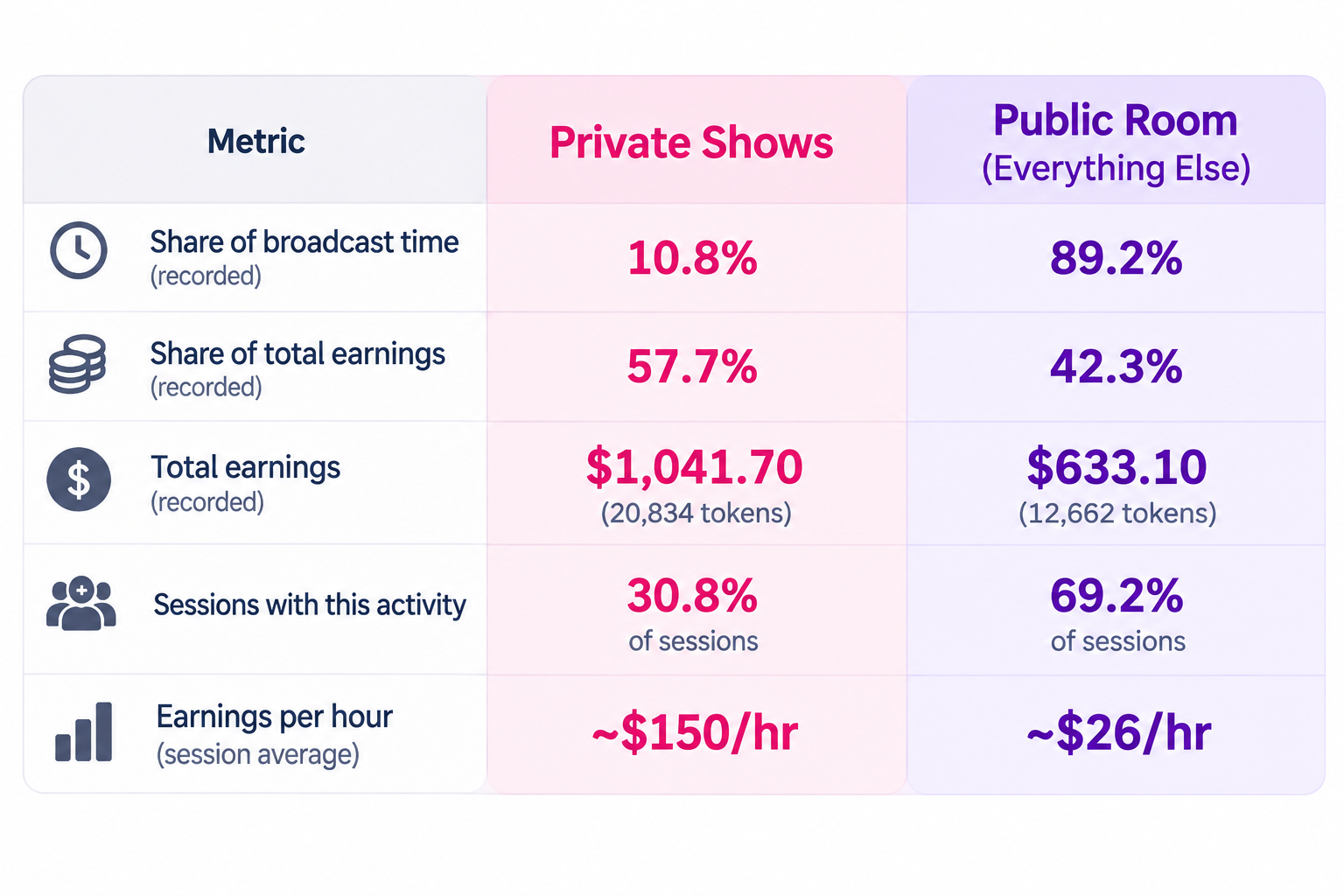
Private shows represent a small share of streaming time but a much larger share of revenue.
What this means
The public room appears to function primarily as a discovery and conversion funnel, while private shows are the major monetization layer.
The key opportunity is understanding which viewers convert to private and what behaviors lead to that conversion.
Just 10.8% of broadcast time generated 57.7% of recorded revenue.
Next steps
Test which public-room behaviors most reliably convert viewers into private customers, since a small amount of private time is currently driving a disproportionate share of revenue.
Finding 2: The Goal Was More Profitable Than the Outcome
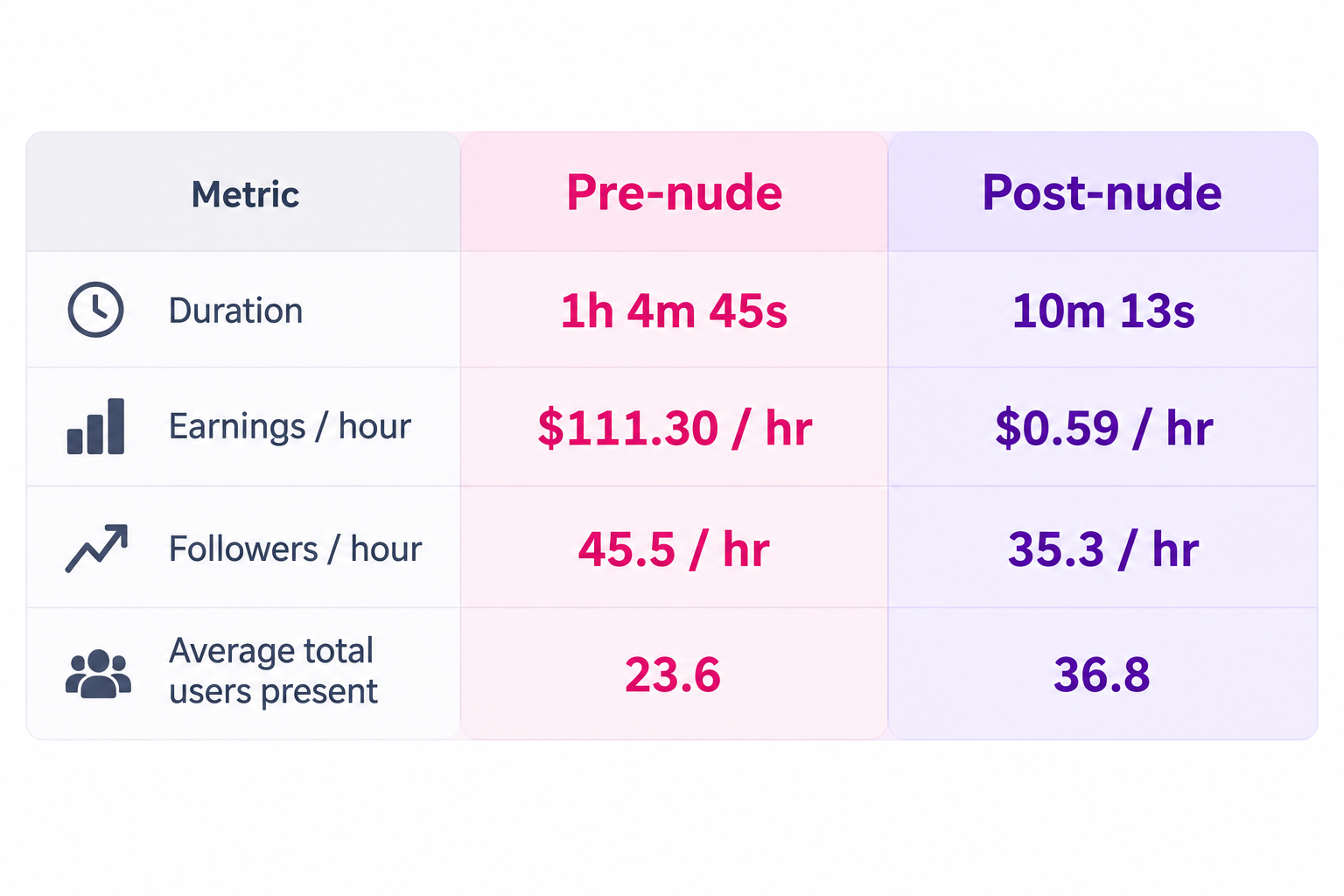
On September 21, the goal-building and pre-nude phase generated substantially more revenue than the period after nudity — even though the audience was actually larger afterward.
What this means
The audience didn't disappear after the goal was reached. More people were present, but they weren't converting into tips.
The money was generated during the anticipation and goal-building phase, including the final contribution that completed the goal. Once the goal was reached, public tipping essentially stopped despite the larger audience.
Earnings/hour fell by approximately 99.5% post-nude goal, while average audience size increased by approximately 56%.
This suggests that progressive goals and anticipation may be stronger monetization mechanisms than immediately delivering the final outcome.
Next steps
Test different goal structures and escalation points to determine whether sustained anticipation generates more revenue than delivering the final outcome.
Finding 3: Shopping Slowed Audience Growth
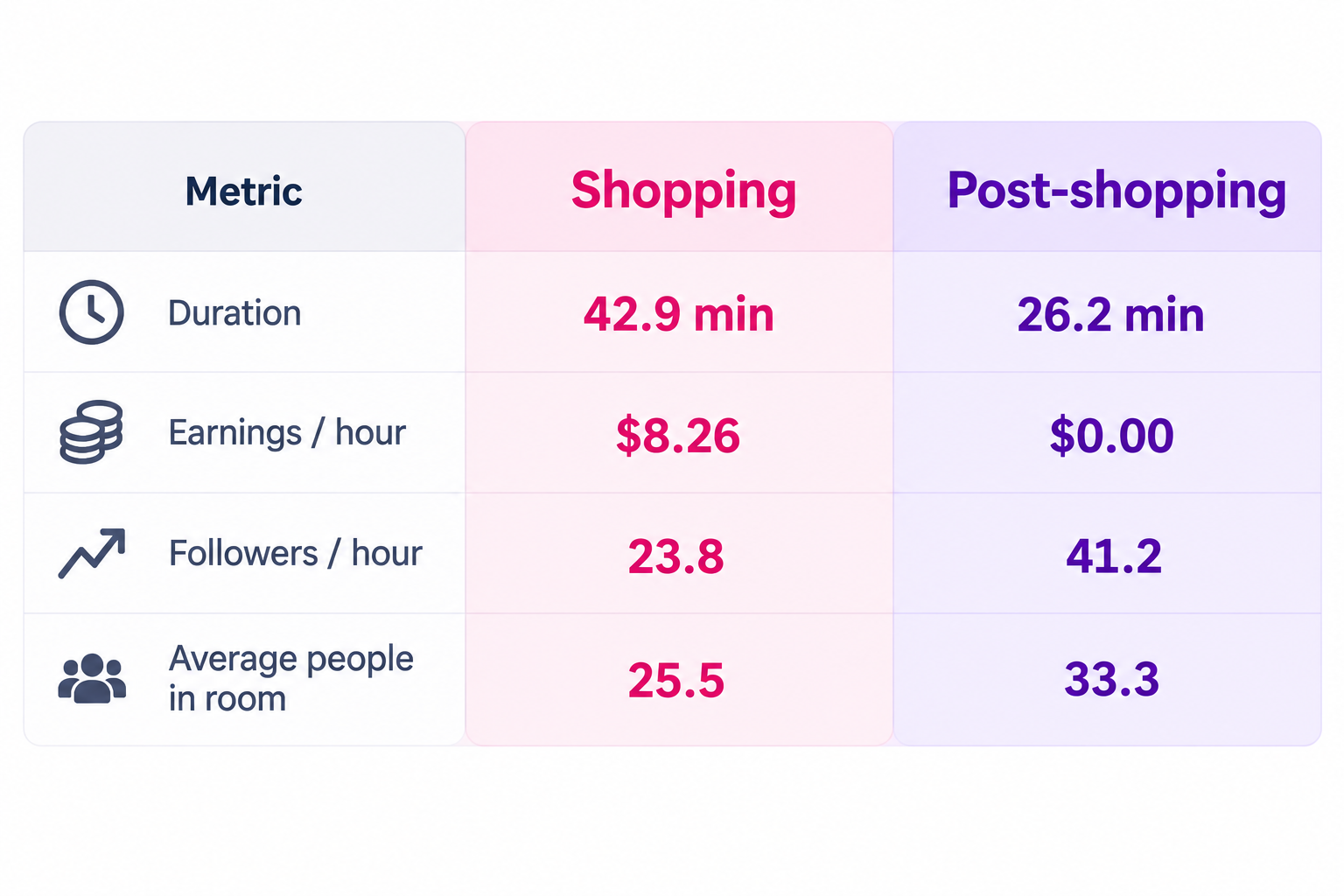
During a September 22 stream, I browsed lingerie and Halloween outfits with the shopping activity visible on stream. The audience remained active, but growth was weaker while attention was divided between shopping and streaming.
What this means
The audience did not disappear during shopping — people continued watching — but audience growth was stronger once attention returned fully to the stream.
During shopping, the room averaged 23% fewer people and generated 42% fewer followers per hour than after shopping ended.
This suggests that visible off-stream activity may be useful as content, but it also has an opportunity cost: dividing attention can reduce engagement and audience growth even when viewers remain in the room.
Next steps
Avoid shopping during streams and keep attention focused on the audience, since shopping was associated with lower audience growth and engagement.
Interested in your own analysis?
Fill out the form to be considered for a free in-take session and analysis. No obligations.
