

Do I Need to Nurture Every Chatter?
When someone comes into my room and starts chatting, I sometimes catch myself wondering: If I keep talking to them, will they eventually tip?
I like chatting. It makes the stream more fun. But my attention is limited, and I wanted to know whether spending a lot of one-on-one time with a new chatter usually leads anywhere.
When someone starts by chatting instead of tipping, how often do they become a tipper?
I looked at 71 people who chatted or tipped across eight of my streams. This is what they did during their first observed engaged visit.
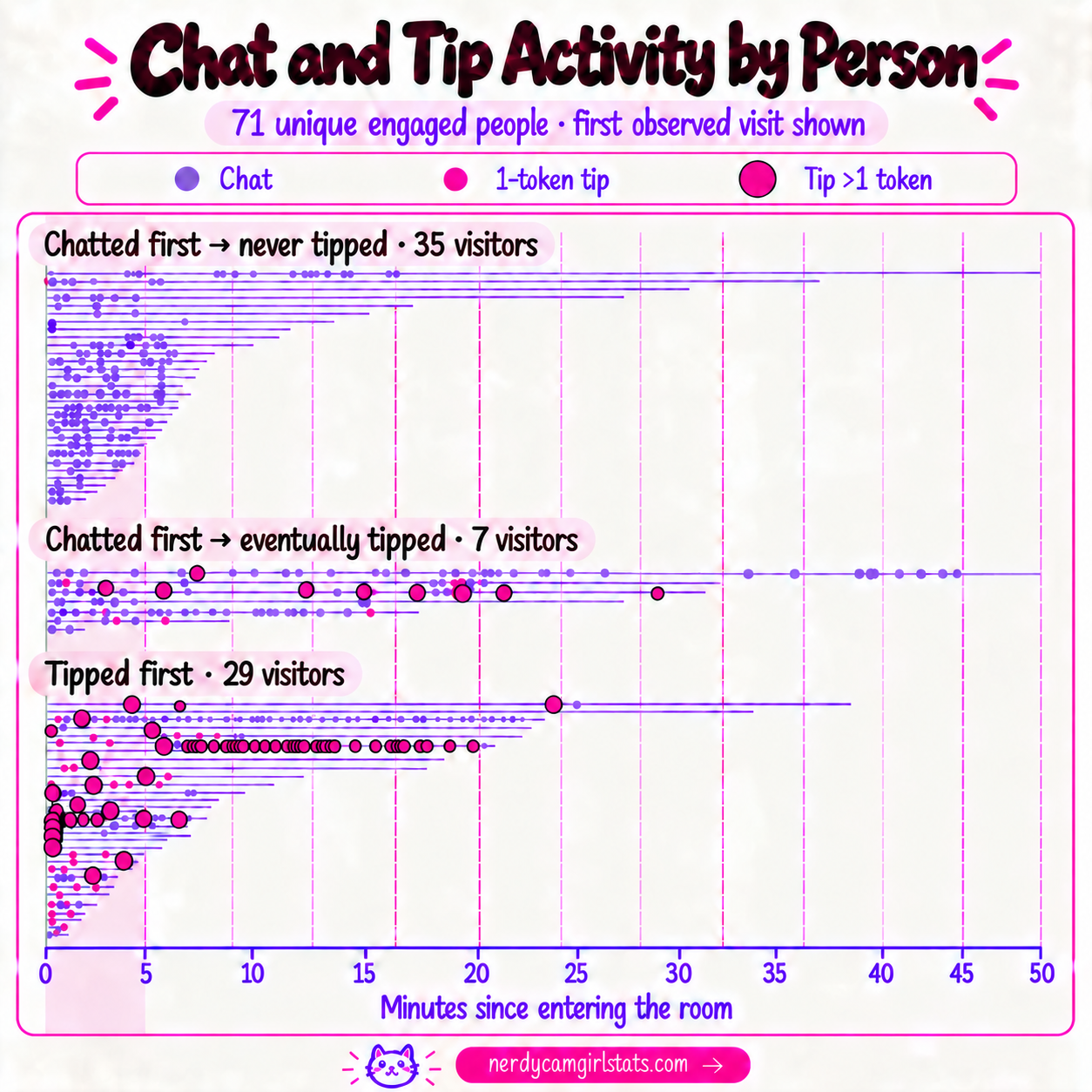
Most chat-first people didn’t tip
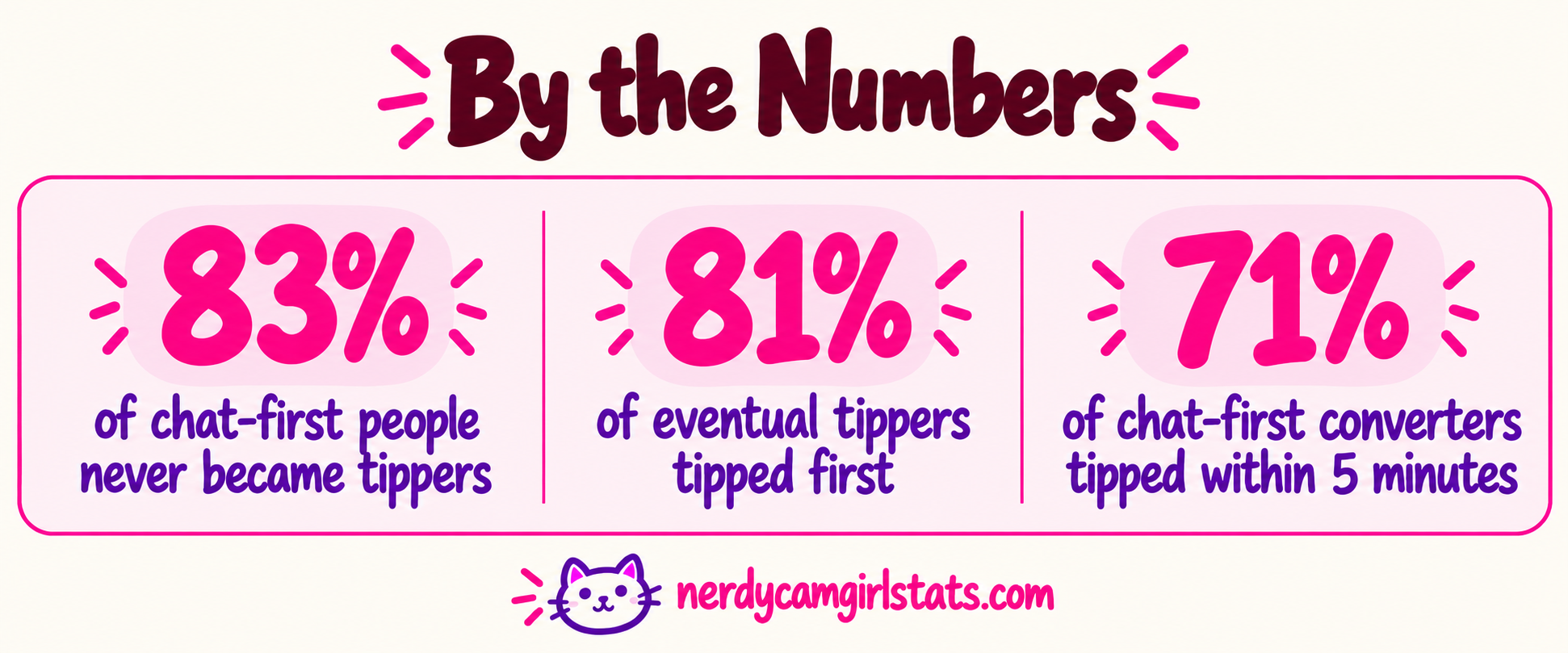
Of the 42 people who chatted before tipping, 35 never tipped during the period I observed them. That’s 83%.
On the chart, they’re the rows of purple dots without any pink. When I’m live, it’s easy to imagine that one more conversation might turn each of those people into a customer. Most of the time in this data, it didn’t.
83% of chat-first people didn’t become tippers during the period I observed.
Most tippers started with a tip
I’d been picturing a path from entering the room, to chatting, to building rapport, to tipping. But most of my tippers took a shorter route.
Of the 36 people who tipped, 29 tipped before they chatted. That’s 81%.
Some chatted afterward, but they didn’t need a long conversation before spending.
The seven people who did chat first and later tip are why I find this decision hard. They show that conversion can happen. But five of those seven (71%) tipped within five minutes, so even among the exceptions, I often got a signal fairly quickly.
What about someone who comes back later?
I checked repeat visits because I didn’t want to write off someone who chatted for free on one day and tipped on another.
Among people whose first observed visit included chatting but no tip, one later returned and tipped in this dataset. That tip was five tokens.
The observation window is limited. Someone could come back and spend after I stopped tracking. Still, the repeat visits I could see didn’t reveal a large group of future customers hiding among the chatters.
There’s also a distinction I want to keep in mind: a returning customer is different from a new chatter. Someone who has tipped me before may chat for a while before tipping again. Their earlier spending tells me something that their behavior in one visit wouldn’t.
What I’m going to do differently
I’m still going to talk to people who haven’t tipped. Chat gives me something to respond to, and I don’t want the room to feel like every sentence has a price.
But I’m going to stop treating “they’re talking to me” as strong evidence that “they’re about to pay me.” I can be friendly without devoting more and more individual attention to someone in the hope that it will eventually convert them.
My rule for now is simple: Chat normally. Don’t chase. If someone tips, or they’ve paid me before, I have a stronger signal to work with.
If you cam, how do you decide how much attention to give someone who chats a lot but hasn’t tipped?
Methods
I analyzed 71 unique people who had at least one public chat or tip event across eight complete sessions from September 21–26, 2026. Each person appears once in the chart, based on their first observed engaged visit. I also checked later observed visits for returns and tips.
This is a small observational sample from my room. I can see what people did during the period I tracked, but I can’t tell whether giving a chatter more attention would have changed their behavior.
